
No image available
Episode 1: Human Extinction
2005-01-15
Travel back in time to look at three of the largest mass extinctions that have decimated life on the planet. What caused these wipeouts?
Season guide
22 episodes · first aired 2005-01-15
TMDB does not provide a season overview.
Travel back in time to look at three of the largest mass extinctions that have decimated life on the planet. What caused these wipeouts?
Each year, the moon moves an inch and one half farther away from Earth and is gaining momentum. The gravity it exerts on our planet acts as a stabilization mechinism, allowing for a consistent range of temperatures, seasons and days. If the moon moves just ten percent farther, it will cause unbelievable disaster for our planet, as Earth tips up to 90 degrees on its axis.
From Hawaii's volcanoes to Greenland's glaciers to meteorites in Australia, teams of international scientists race to solve the mystery of how life first formed on Earth.
TMDB does not provide an episode synopsis.
Until recently, there was nothing that could be done about natural disasters like super-volcanic eruptions, meteors striking Earth, and severe hurricanes. Now, both science and government are looking at possible game-changing options that include giant space mirrors, hurricane-draining pumps and lasers to save people and the planet.
Scientists reveal evidence of the existence of alien life. Detailed imaging of an underground ocean on a planetary moon and newly discovered extrasolar planets reveal what contacting alien life will be like. This is a serious scientific look at how will we meet ET.
The famous explosion that took place in Siberia early in the 20th century, known as the Tunguska Event, obliterated everything within thousands of square miles. It was so intense that the skies of Europe were lit for several nights. The debate continues over its cause: meteor, comet, or volcanic gasses?
Iceland's Eyjafjallajokull volcano erupted April 14, 2010, spewing aircraft-harming ash over most of Europe. It could cause Katla, its neighboring, larger volcano to erupt. NGC looks at Eyjafjallajokull before, during and after, explaining the science behind the chaos and the biggest disruption of air traffic since 9/11.
Dead Tired uncovers research exploring whether tiredness may lead to heart attack, diabetes, obesity, and depression. In a unique TV experiment, witness what happens to a healthy 25-year old when he cuts back his sleep from eight to three hours a night for one week. The results are shocking! He loses lucidity, dreams whilst awake and drives a car while fast asleep!
Cameras offer a rare look inside the Navy's latest weapon in the fight against terrorism: the USS Florida, a guided missile submarine. In a Joint Operations mission, the sub smuggles Navy SEALS ashore to identify a terrorist location and the use shipboard guided missiles to destroy the target. The technology on the sub allows it to operate quieter and stay underwater longer than previous ships.
This program looks at the remarkable occurrence of the total solar eclipse over Easter Island on July 11, 2010. The program looks at the science of the sun as it is revealed via the eclipse phenomenon and then takes us "near live" to the actual event as the film will be aired domestically only a few hours after it takes place there.
As the sun continues to age, it becomes increasingly hot and begins to expand, eventually swallowing up Earth. The temperatures on our planet will rise, turning the third rock from the sun into a scorched and uninhabitable wasteland. The changes our planet will undergo are depicted.
Have you ever seen lightning strike from the ground to the sky or float in midair? Spectacular and exotic forms of this natural phenomenon are slowed down on film to reveal minute detail. Luminous spheres that linger in airplanes are recreated. We will show you how rockets launched into storm clouds coax lightning down to earth. Naked Science: Lightning Chasers illuminates secrets of nature's most striking
Some believe that man's insatiable desire to alter his environment is actually causing natural disasters. Urban sprawl perhaps strengthened a tornado in Atlanta; massive amounts of coal and water removal may have triggered Australia's strongest-ever earthquake; natural gas drilling causing a mud volcano in Java; these specific examples examined.
With most of the planet covered by oceans and overcrowding an issue on land, the time may be right to turn the science fiction idea of living beneath the sea into a reality. This episode examines what it would take to construct and operate an undersea colony of 100 families. The technology that could make it happen is already being developed.
Recently, paleontologists unearthed the fossilized remains of a 35-foot, 240 million-year-old ichthyosaur in Nevada's Augusta Mountains and instantly knew this creature would have been the ocean's top predator. Join the investigation as scientists attempt to understand where this unique creature fits in the evolutionary history of the first sea reptiles. Both in the lab and in the field, paleontologists search for clues to explain how a species that originally came from land transformed over millions of years into a purely aquatic creature.
Scientists study fragments of a meteorite, hoping to gain insight into the origins of life on Earth. Also: a controversial space rock from Mars is examined at NASA's Johnson Space Center in Houston.
Does evolution really explain how life on Earth began? For decades, critics have attacked Darwin's theory and supported the case for a designer behind our existence. Could Darwin have been wrong?
Imagine a world frozen solid. Imagine that vast sheets of ice hundreds of feet thick encased the entire planet--a giant snowball floating through space. This is not some exotic new world deep in space. It may be our world, the Earth. Some top-ranking scientists believe that in the past the Earth froze over completely for millions of years... then warmed up rapidly over 600 million years ago. Struggling against skepticism and disbelief for years, they have gathered a growing body of evidence that explains many mysteries, and others in the scientific community are slowly coming around to the extraordinary idea not just of the dramatic freeze, but of an equally dramatic thaw. Naked Science explores what may have been the most extreme period of Earths climatic history, Meeting all the major players of this controversial theory that is Snowball Earth.
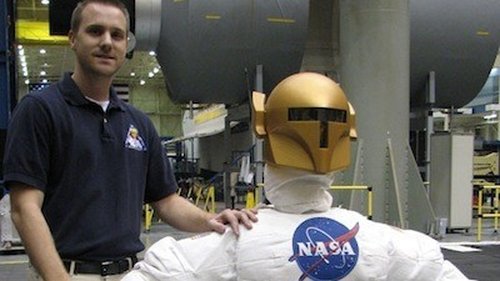
An insider's look at NASA's Constellation program which hopes to establish a human outpost on the moon by 2020.
On February 5th 2008 Super Tuesday 57 people lost their lives as 87 tornadoes devastated 5 states. It was Americas deadliest tornado outbreak in nearly a quarter of a century. Tornados are one of the most destructive forces of the planets with winds at 300 mile an hour. They can destroy buildings and hurl cars hundreds of feet through the air. Every year tornadoes decimate communities around the world killing hundreds of people. Planet Science deconstructs a tornado to learn how they form and how the develop such ferocious winds.
Secret World of Fireworks explores the closely held secrets, recipes, and techniques from the world of pyrotechnic showmen. National Geographic takes a behind the scenes look into this exclusive world with unique access from Zambelli Internationale of New Castle, Pennsylvania - Americas First Family of Fireworks - along with rocket scientists and chemists from Los Alamos, New Mexico.
Series, season and episode metadata is supplied by TMDB. No season-specific provider claim is made on this page.